


Getting a new boiler fitted is a big job for any household. Even when it is planned well, it still means engineers coming and going, tools out, water off for a while and a bit of disruption. The good news is that with a bit of preparation, it can be a straightforward, stress free experience.
Over the years I have fitted boilers in everything from compact terraces in Caversham to larger properties in Ascot. The jobs that run smoothly are nearly always the ones where the homeowner knows what to expect and gets a few simple things sorted beforehand. Here is a practical step by step guide to help you do just that.
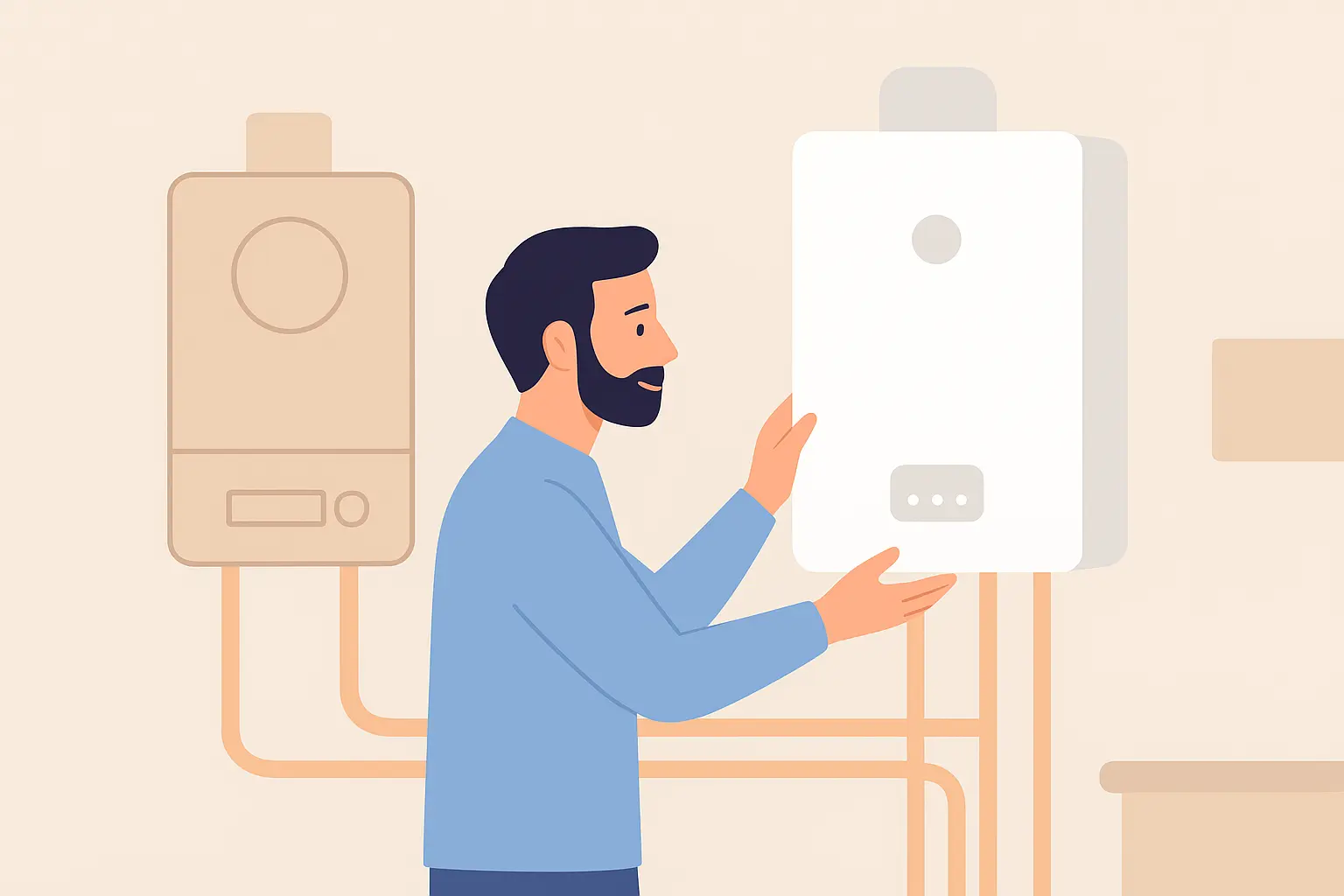
Why preparation matters before a boiler replacement
A boiler swap is not just about taking one box off the wall and hanging a new one up. Modern boilers often need different flue positions, upgraded pipework, a magnetic filter, sometimes a condensate pipe and in many homes a power flush or chemical clean.
If we arrive and find the airing cupboard packed floor to ceiling, no clear route for pipework or radiators that are barely hanging on the wall, it slows everything down. That can turn a one or two day job into something more drawn out.
A bit of forward planning avoids last minute decisions and helps keep your heating back on as quickly as possible.
Clear the installation area and ensure easy access
This is the simplest but most important step.
Make space around the existing boiler
Whether your current boiler is in the kitchen, loft, garage or airing cupboard, clear the surrounding area properly. Engineers need room to work safely, remove the old unit and manoeuvre the new one into position.
In a typical airing cupboard, that means:
- Removing everything stored on shelves near the boiler
- Taking bedding and towels out of the cupboard
- Making sure there is clear floor space
If the boiler is in the loft, check the loft hatch is accessible and there is a safe, boarded area to work on. You would be surprised how often we turn up and find the hatch blocked by wardrobes or boxes.
Clear a path through the house
We will be carrying tools, parts and sometimes taking old components outside. Move furniture if needed and lift valuable rugs or mats. In older properties in Berkshire with narrow hallways, that bit of preparation really helps.
Good installers will use dust sheets, but making access easy protects your home and speeds the job up.
Check pipework, radiators and heating system condition
A new boiler will only perform as well as the system it is connected to.
Look at your radiators
Are any of them cold at the bottom or slow to heat up? Do some rooms never quite warm properly? Mention this before the installation day. It may indicate sludge in the system, which could mean a flush or clean is needed.
If you are in areas like Caversham or older parts of Berkshire where pipework can date back decades, it is especially worth checking. Old systems often benefit from upgrading valves or adding a magnetic filter.
heck for leaks or tired components
Small drips under radiators, corroded valves or very old pipework should be flagged in advance. It is far easier to factor in small repairs ahead of time than discover them halfway through an install.
If you are upgrading controls at the same time, you might also want to think about modern options like smart thermostats. It is worth understanding how these work and where receivers will be positioned. There is useful information on smart controls that explains the practical setup without overcomplicating things.
Plan for downtime and protect your home during the work
Most boiler replacements take one to two days. During parts of that time, you will not have heating or hot water.
Prepare for being without heating and hot water
If the job is being done in winter, plan ahead. Use an electric heater in the main living area if needed and consider timing showers for when the system is live if it is a straight swap taking one day.
Families often ask me, “Will we be without hot water overnight?” In many straightforward installs, no. But if the boiler is being relocated or a cylinder changed, there can be a longer period without it. Ask your installer in advance so you know what to expect.
Protect pets and children
Keep pets away from the work area and make sure children understand that tools and pipework are not to be touched. It sounds obvious but on busy installation days there are drills, cutters and electrical testing underway.
If your boiler is being moved for example from a kitchen to a utility room in a property in Ascot, there may be more pipework alterations and a bit more noise than a simple swap.
Communicate with your installer and confirm requirements
Clear communication avoids surprises.
Confirm location and flue position
If you are changing the boiler location, make sure you understand where the new flue will exit and whether any external pipework will be visible. In some streets, particularly in conservation areas, positioning can matter.
Agree controls and extras in advance
Decide where your thermostat will go. Check whether you are keeping existing timers or fitting something new. If you are considering ongoing protection, it is also sensible to ask about cover plans so you know what support is available after installation.
Provide clear access to the gas meter and stopcock on the day. We will need to isolate supplies safely and test everything before leaving.
Aftercare: What to do once your new boiler is installed
Once the new boiler is up and running, do not just switch it on and forget about it.
Ask for a proper handover
Your engineer should show you how to:
- Adjust heating and hot water settings
- Top up pressure if required
- Use the thermostat or smart controls
- Understand basic fault codes
Take five minutes to go through it properly. I always tell homeowners to ask even the simple questions. It is far better than guessing later.
Keep paperwork safe
Store your benchmark certificate, warranty details and service records somewhere accessible. Your boiler should be serviced annually to keep it running efficiently and maintain the manufacturer warranty.
A well installed and well maintained boiler should give you reliable heating for many years. Preparation before the job and good aftercare once it is complete make all the difference.
If you are planning a replacement and want straightforward, practical advice tailored to your home, the team at TS GAS are always happy to talk it through. You can book your boiler replacement consultation today and get clear guidance on the next steps without any pressure.
A little preparation now means a smoother installation and a warmer, stress free home when it matters most.
g