


It’s the first hard frost of the winter, the house is cold and the boiler has stopped with a fault light showing. If you have a condensing boiler, the most likely cause is a frozen condensate pipe. You can usually fix it yourself by pouring warm, not boiling, water over the frozen section and then resetting the boiler once. If it won’t restart, or the pipe is out of safe reach, our central heating team covers homes across Berkshire. Give us a call on 0800 334 5658.
What is a condensate pipe?
Every modern condensing boiler, whether it runs on mains gas, oil or LPG, produces a small amount of slightly acidic water as it works. That water drains away through a plastic pipe, usually white or grey, which often runs through an outside wall to a drain or soakaway.
When that pipe runs outside, the water inside can freeze during a cold snap. Ice blocks the pipe, the water backs up into the boiler and the boiler shuts itself down to protect itself.
Signs your condensate pipe has frozen
- The boiler has stopped during freezing weather and shows a fault code or warning light
- You can hear gurgling coming from the boiler
- The plastic pipe outside feels solid or has ice at the open end
- The boiler fires briefly, then locks out again
The fault code varies by make, so check your boiler manual.
How to thaw a frozen condensate pipe safely
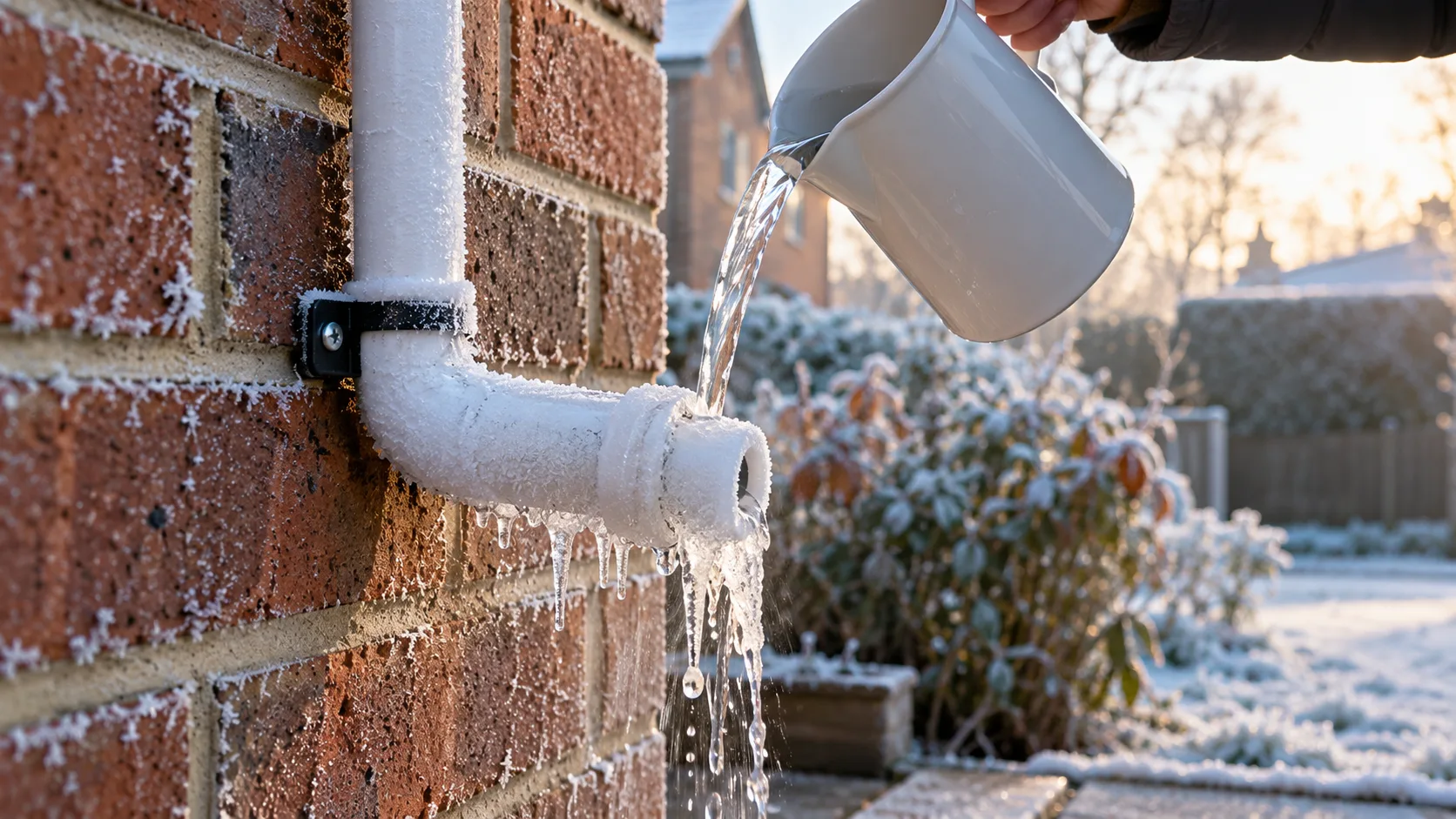
- Find the plastic pipe where it leaves the house and follow it to the end. The blockage is usually at the lowest point, a bend or the open end.
- Fill a kettle or jug with warm water. Let freshly boiled water cool for a while first.
- Pour it slowly over the frozen section. A hot water bottle or a warm cloth held against the pipe works too.
- Keep going until the ice clears and water can drain freely.
- Reset the boiler once, following the instructions in your manual.
Never use boiling water, as it can crack the plastic pipe, and be careful of icy ground underfoot. Don’t try to remove the boiler casing or work on anything inside the boiler. If the pipe runs high up a wall, leave it to us.
What if the boiler still won’t start?
If the pipe is clear and the boiler still won’t fire, or it keeps locking out, there may be a different fault. Low pressure, a failed ignition or a problem with the fan or sensors can all show similar symptoms. These need a Gas Safe registered engineer for gas and LPG boilers, or an OFTEC registered technician for oil.
If you smell gas at any point, turn off the supply at the meter if it’s safe, open windows and call the National Gas Emergency Service on 0800 111 999.
Stopping it happening again
If your condensate pipe freezes most winters, there are a few simple fixes an engineer can make:
- Insulating the pipe with waterproof lagging where it runs outside
- Rerouting it so more of it runs inside the house, to an internal drain where possible
- Fitting a wider pipe outside, as larger pipes take much longer to freeze
It’s worth sorting before the coldest weeks arrive, rather than waiting for the next frost. Our guide on whether your home is winter ready covers other checks worth making at the same time.
Frozen condensate pipes in Berkshire homes
Plenty of boilers around Reading, Woodley, Wokingham and the surrounding villages are fitted on outside walls, with the condensate pipe running a long way down the brickwork to a drain. Exposed spots like north-facing walls, side passages and outbuildings are the most likely to freeze. Rural homes with oil or LPG condensing boilers in garages or utility rooms can be caught out too, especially if the pipe runs across a yard to a soakaway.
Frequently asked questions
Can I use boiling water on a frozen condensate pipe?
No. Boiling water can crack or split the plastic pipe, leaving you with a leak as well as a frozen boiler. Use warm water instead, poured slowly, or hold a hot water bottle against the frozen section until the ice clears and water drains freely.
How do I know which pipe is the condensate pipe?
It’s usually a white or grey plastic pipe, about the width of a thumb, that comes out of the bottom of the boiler and runs to a drain. Outside, look for a plastic pipe ending over a gully or disappearing into the ground. Copper pipes are something else, so leave those alone.
Do oil and LPG boilers have condensate pipes too?
Yes, if they’re modern condensing boilers. They produce condensate in the same way as gas boilers, so the pipe can freeze in the same conditions. The thawing method is the same. If the boiler won’t restart afterwards, call an OFTEC registered technician for oil or a Gas Safe engineer for LPG.
Boiler stopped in the cold?
If you’ve thawed the pipe and the boiler still won’t restart, give us a call on 0800 334 5658 or drop us a message and we’ll come and get your heating back on.