


With the first frosts on the way, it’s a question plenty of people ask before switching from a boiler. Yes, heat pumps work in winter. An air source heat pump draws heat from outside air even when it’s well below freezing, and a properly designed system keeps a home warm through a normal British winter. It runs differently from a boiler, though: lower temperatures for longer, with the odd defrost cycle. If you’re thinking about one for a home in Berkshire, our heat pumps page explains the systems we fit.
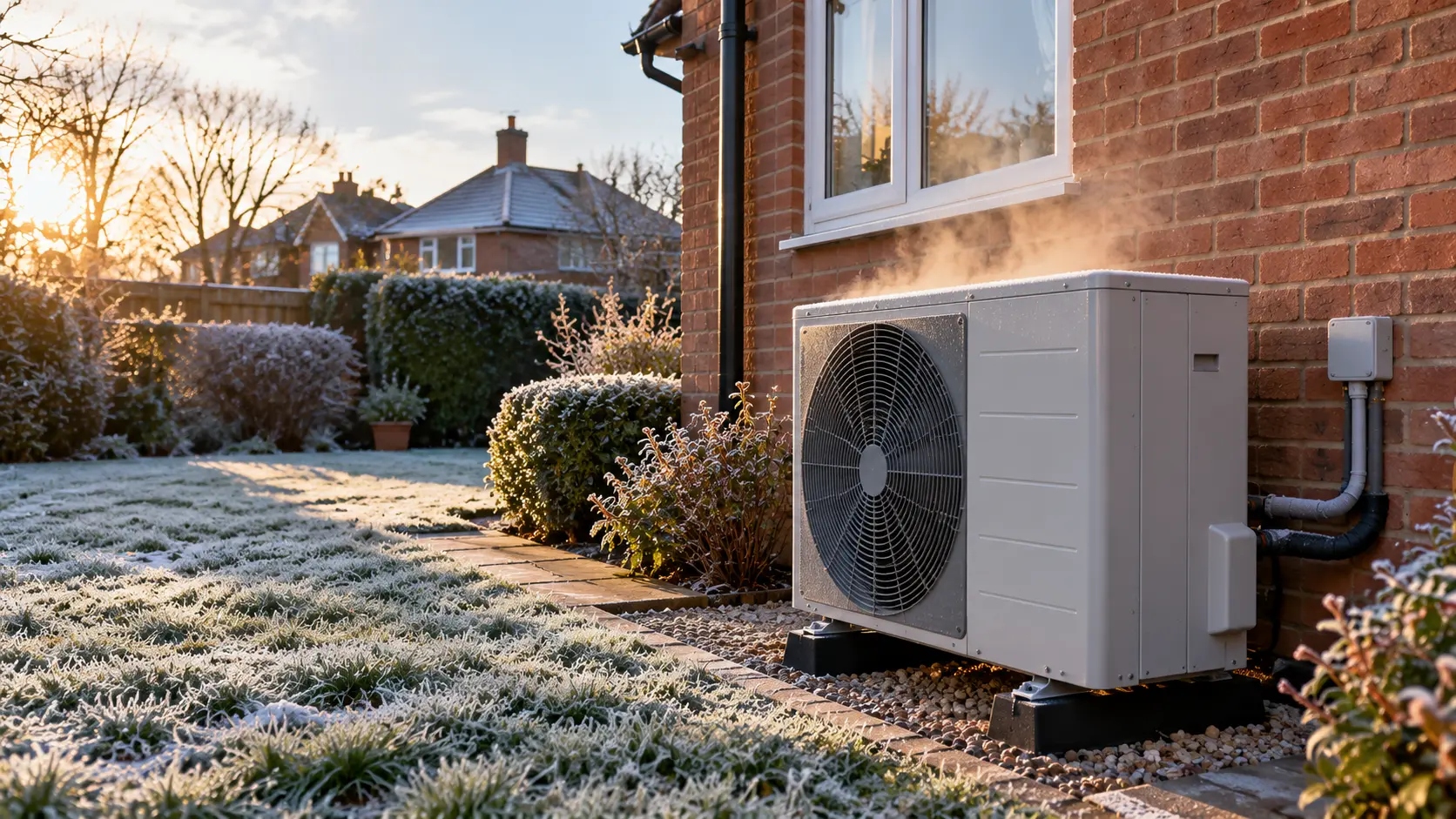
How a heat pump finds heat in cold air
Outside air contains heat energy even on a frosty day. A heat pump passes that air over a coil containing refrigerant, which boils at a very low temperature. A compressor then raises the temperature of that refrigerant and transfers the heat into your heating water.
As it gets colder outside, the heat pump has to work harder, so its efficiency drops a little. A system sized for your home allows for that, using a design outdoor temperature for your area so it still meets the heat demand on the coldest typical days.
Why the outdoor unit steams and goes quiet
On cold, damp days you may see the outdoor unit stop, then release a cloud of steam. That’s a defrost cycle. Ice builds up on the coil, and the heat pump briefly reverses to melt it. It’s completely normal and usually lasts a few minutes.
Keep the area around the unit clear of leaves, snow and anything stored against it, so air can flow and meltwater can drain away.
Getting the settings right for winter
Heat pumps work best running steadily, rather than in short, hot bursts like many boilers.
- Leave it running. Most installers recommend steady, longer running periods rather than switching the heating off and on.
- Avoid big setbacks. Turning the temperature right down overnight can mean the heat pump has to work much harder to recover in the morning.
- Leave the weather compensation on. It adjusts the water temperature to the outdoor temperature automatically.
- Don’t turn TRVs right down in rooms you use. Heat pump systems are usually designed with most radiator valves open.
Your installer should set the system up for your home and explain the controls at handover.
Radiators, insulation and comfort
Because a heat pump heats water to a lower temperature than a boiler, radiators feel warm rather than hot to the touch. That’s expected. The room should still reach the temperature you’ve set.
If some rooms struggle in very cold weather, the cause is usually that a radiator is too small for the room’s heat loss, the room is poorly insulated or the controls aren’t set up well. A heat loss calculation for each room at the design stage avoids most of these problems.
Heat pumps in Berkshire homes
Berkshire winters are relatively mild compared with much of the UK, which suits air source heat pumps well. Many family homes around Reading, Wokingham, Woodley and Newbury have the outdoor space for a unit and room for a hot water cylinder. Older homes may need extra insulation or some larger radiators first. Our central heating team can look at what your current system would need.
If you’re planning a cylinder for a heat pump, it can also be worth thinking about solar thermal at the same time.
Frequently asked questions
Do heat pumps stop working below freezing?
No. Air source heat pumps are designed to keep working well below 0°C, though efficiency falls as it gets colder. A correctly sized system accounts for this. Check the manufacturer’s operating range for the specific model, as it varies between products.
Will my electricity bill go up in winter with a heat pump?
Yes, as with any heating system, you’ll use more energy in the colder months. How much depends on your home’s insulation, the system design, your settings and your electricity tariff. Some heat pump owners choose tariffs designed for heat pumps or off-peak use.
Does a heat pump need servicing?
Yes. Manufacturers usually recommend an annual service to keep the warranty valid and the system running efficiently. It typically includes checking the outdoor unit, refrigerant circuit performance, system pressure, filters and controls. Booking it before winter means any issues are found before the system is working hardest.
Can a heat pump heat hot water in winter?
Yes. The heat pump heats a hot water cylinder, usually on a schedule. Most systems also include an immersion heater, used periodically to raise the water temperature for hygiene reasons, which your installer will set up. Hot water may take a little longer to reheat in very cold weather.
Thinking about a heat pump?
If you’d like to know whether a heat pump would keep your home warm through the winter, give us a call on 0800 334 5658 or drop us a message and we’ll come and look at your home and current heating.